Contact sales

Lumen CF-1

Coolant. Clearly.

A photonic coolant lab for every liquid cooling loop. It measures what's in your coolant every few minutes and reports over its own secure cellular link, without ever joining your network.

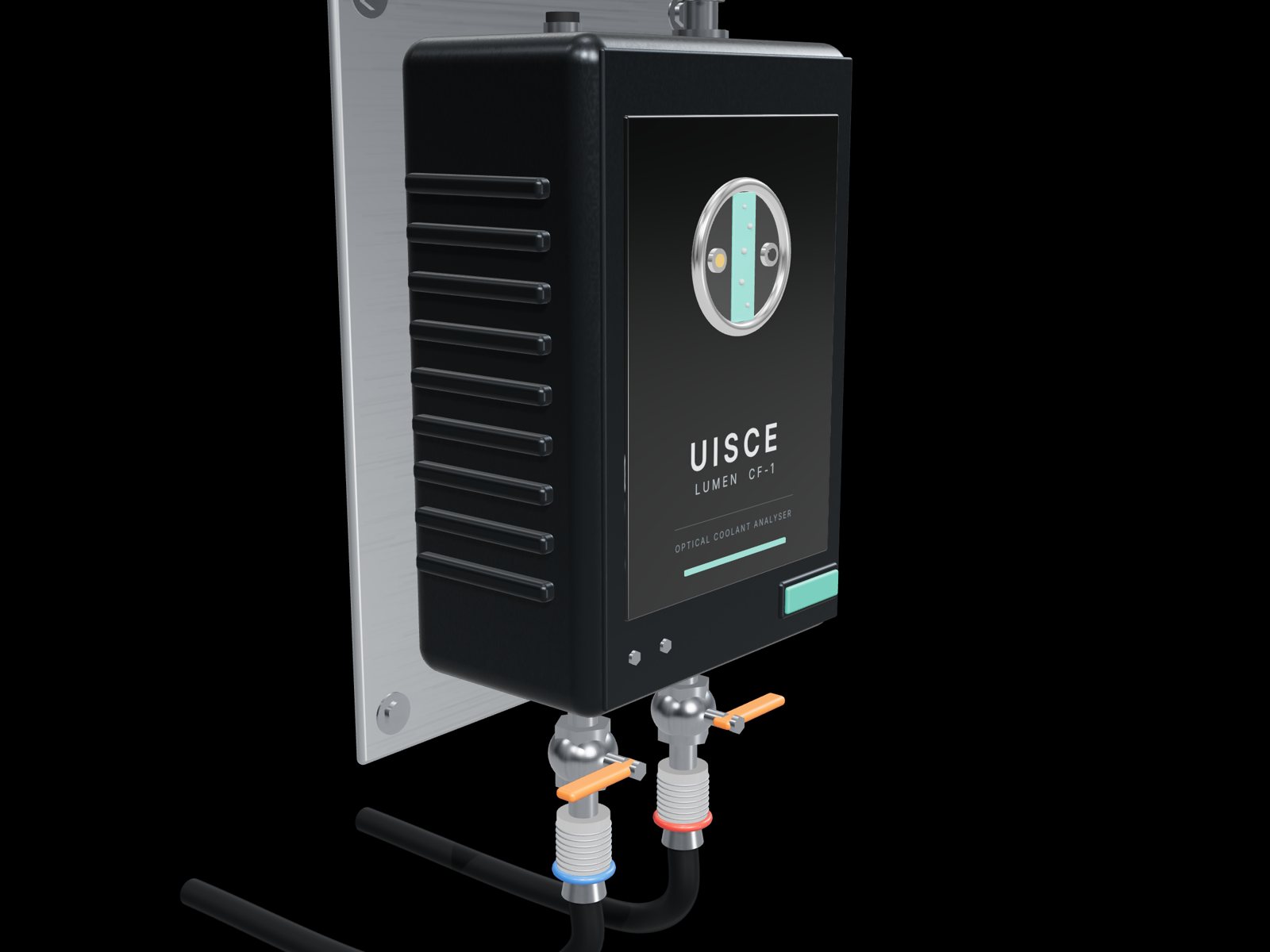
UISCE Lumen CF-1 optical coolant sensor with sapphire viewing window, orange isolation valves and UQD08 couplings

From a team building field-proven hardware since 2012. Now recruiting design-partner sites.

Seven readings.
One clear picture.

Lab sampling tells you what happened last quarter. The CF-1 tells you what's happening now, and which way it's heading.

Glycol24.6% v/v
pH9.12
Turbidity0.8NTU
Conductivity412µS/cm
Microbial fluorescence+18% in 7 days
Supply temperature32.4°C

Example readings. Green band is the healthy range set from your coolant supplier's specification. Orange marks a trend leaving its band, raised as an early warning.

Watch how the CF-1 measures coolant, where it mounts, and how alerts reach your team.

Proven technology

New to data centres.
Not new to hard places.

UISCE.ai takes its name from uisce, the Irish Gaelic word for "water" (pronounced ish-ka). We are an Irish company that has been designing and building rugged electronics, firmware and cellular-connected IoT systems since 2012. Our hardware, connectivity and cloud stack has been proven in the field for years, not in a lab.

2012

Designing and building field hardware since

200+

Customers across the USA, Europe and Asia

200+

Large capital projects completed

24/7

Unattended operation, reporting over cellular

Battle-hardened in the harshest environments

Under our animal care IoT brand, our systems run in zoos, safari parks and wildlife facilities worldwide. That means outdoors, wet, dirty and exposed to animals, running unattended around the clock and reporting to a secure cloud for AI processing. A plant room or a CDU gallery is a gentle place by comparison.

The parts of a monitoring product that usually take longest to get right are already solved: enclosures that survive years in the field, firmware that recovers on its own, cellular connectivity that keeps reporting from remote sites, and cloud software that turns raw readings into something an operator can act on. We've done it hundreds of times.

The new innovation is the sensing element. Off-the-shelf sensors drift and need frequent recalibration, which isn't good enough for continuous, unattended use in a cooling loop. So we've built our own photonics.

Harsh environments

Sealed, rugged hardware designed for heat, damp, dust and years without a site visit.

Connectivity at scale

Cellular-connected devices reporting reliably from remote sites across three continents.

Large projects delivered

Experienced in specifying, installing and supporting multi-site capital projects, from design to handover.

Connectivity

Off your network.
On your side.

Most monitoring hardware has to be plugged into your network, reviewed by your security team and given a path through your firewall. The CF-1 brings its own connection. A built-in high-speed 5G/4G cellular modem sends encrypted data straight to the UISCE.ai cloud, completely separate from your servers and your clients' networks.

Zero

ports opened

The CF-1 only makes outbound, encrypted connections over cellular. Nothing on your network can reach it, and it can't reach anything on your network.

No

IT project

No VLANs, firewall rules or network change requests. Mount it, connect the couplings, power it on, and readings appear in the dashboard.

Your

choice of link

Prefer a wired connection? Every CF-1 also has Ethernet, so you can feed your BMS over Modbus TCP or run it entirely on your own network.

Why out-of-band matters in a data centre

Every device added to a production network is another thing for your security team to assess, patch and watch. In colocation, it can also mean a third-party device touching infrastructure your clients rely on. Keeping the sensor on its own cellular link removes it from that attack surface entirely.

It also keeps coolant data flowing when you need it most. If the site network is down, under maintenance or isolated during an incident, the CF-1 still reports. Readings are buffered on the device and sent as soon as a connection is available.

Cellular is how our devices have reported from remote sites for over a decade. Inside deep data halls where signal is weak, the CF-1 takes an external antenna on a cable run to a better position. We check coverage as part of every site survey.

UISCE Lumen CF-1 mounted beside a CDU with its antenna cable running from the top connector

Why it matters

Liquid cooling made coolant
a critical asset.

Direct-to-chip cooling sends coolant through cold plates with channels a fraction of a millimetre wide. Its chemistry changes every day it runs, yet most sites still check it by posting a sample to a lab and waiting days for a report.

Corrosion

Inhibitor depletion and pH drift let copper and steel corrode. Dissolved metals and oxide particles then circulate to every cold plate on the loop.

Biofilm

Bacteria grow where glycol is diluted or biocide is spent. Biofilm narrows microchannels, insulates heat-transfer surfaces and speeds up corrosion beneath it.

Fouling

Installation debris, corrosion products and degraded seals collect in filters and cold-plate fins, raising pressure drop and chip temperature.

Glycol drift and breakdown

Wrong-mix top-ups and leaks shift concentration, while heat and oxygen turn glycol into acids. The fluid can look clear long after it stops protecting the loop.

When operators lose confidence in their coolant, they flush and refill, which means downtime on racks that earn money by the minute. Seeing problems as they start lets you correct the chemistry in place, extend fluid life and plan maintenance on your schedule.

How it works

Measured with light.
Nothing to foul.

The CF-1 measures coolant optically through sapphire windows. No probes sit in the fluid and no reagents need replacing, so it runs unattended for months on a sealed loop.

  1. Step 1

    Draw

    A small sidestream flows through two ½" UQD08 couplings. Flow to the racks is untouched.

  2. Step 2

    Illuminate

    LEDs from ultraviolet to near-infrared shine through the flow cell.

  3. Step 3

    Measure

    Absorbance, scattering, fluorescence and refractive index become chemistry readings.

  4. Step 4

    Compare

    Each reading is checked against limits from your coolant supplier's specification.

  5. Step 5

    Alert

    Excursions reach your team over cellular, with forecasts of when each value will leave its band.

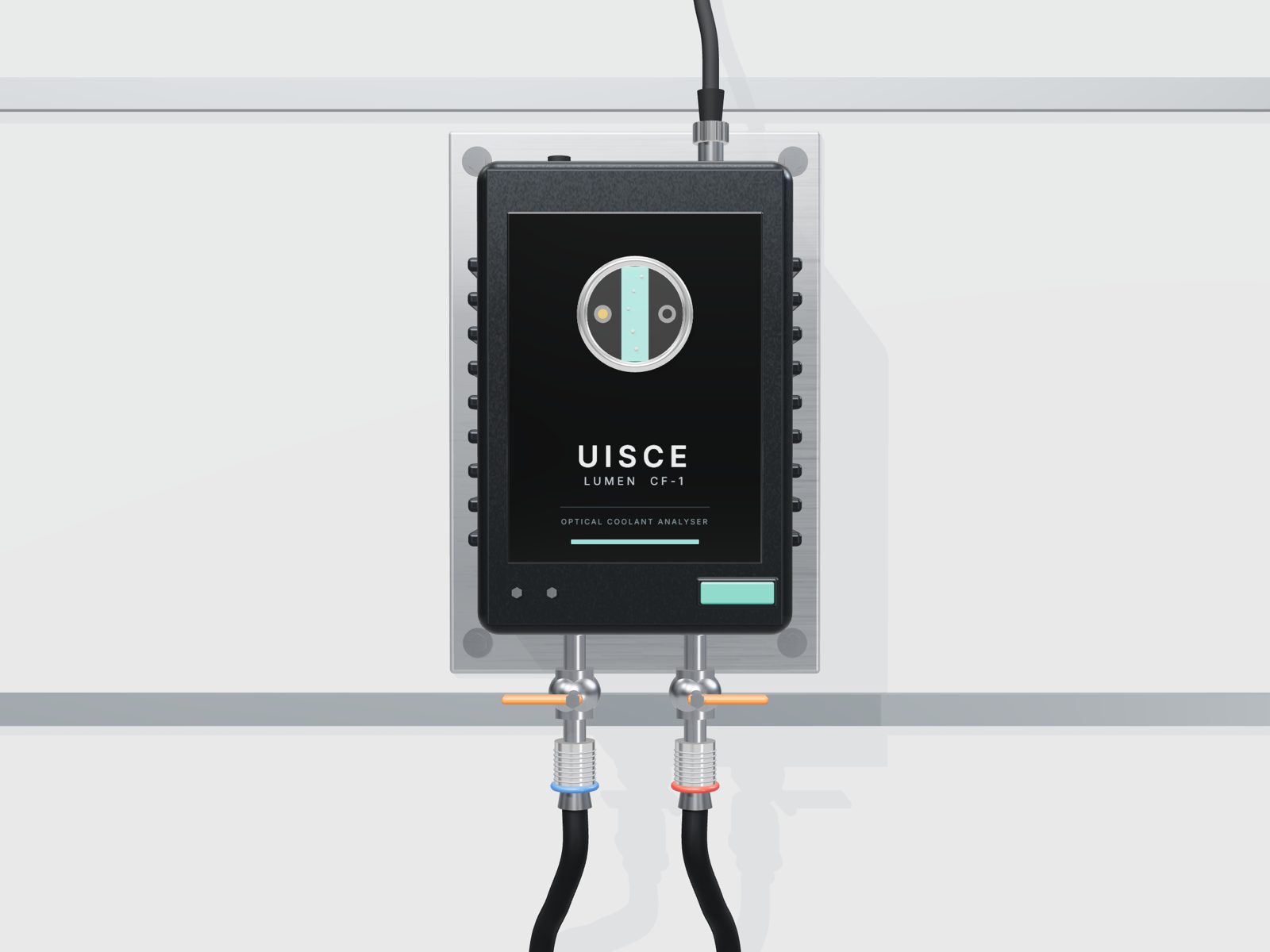
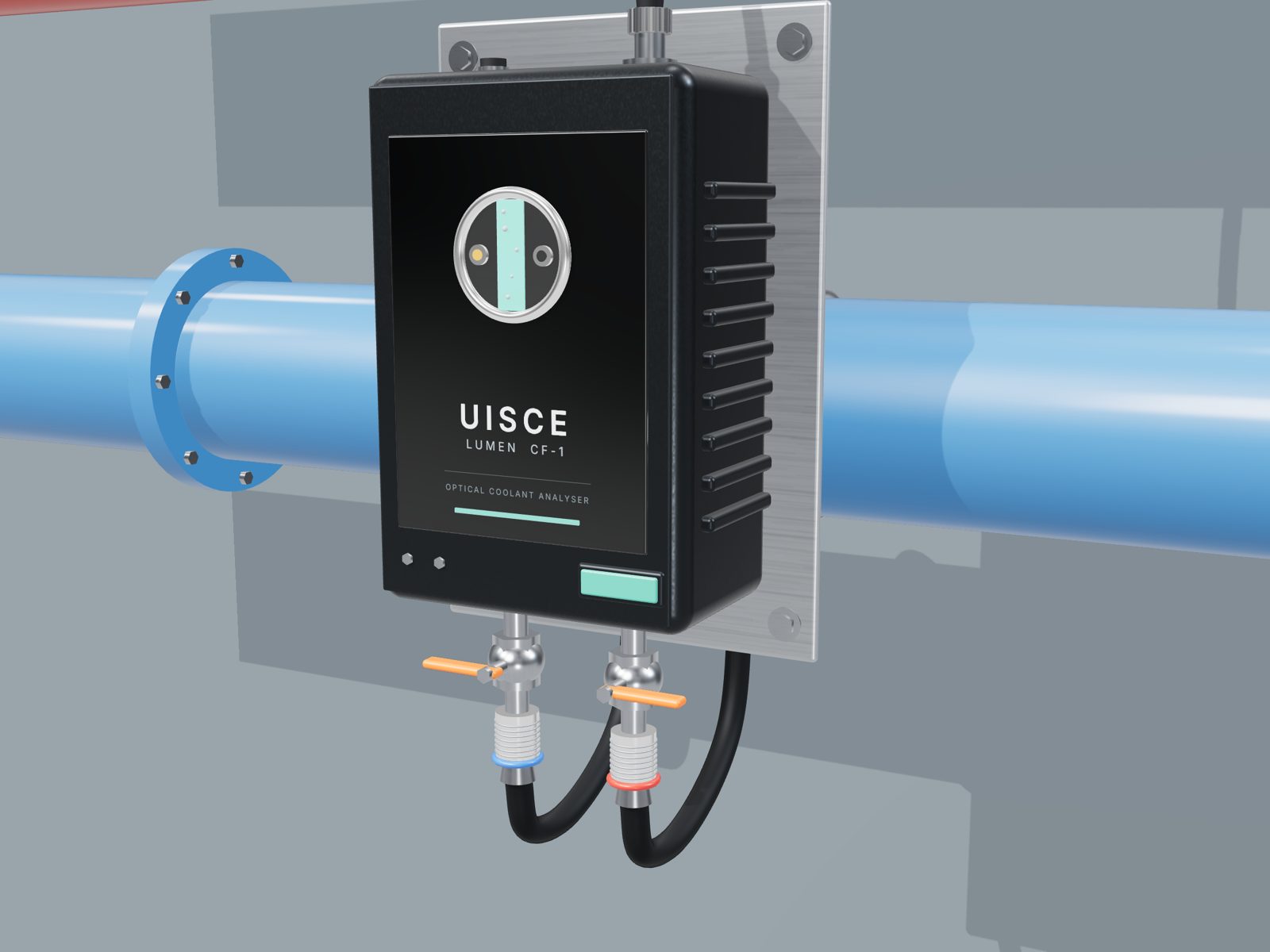
Front view of the UISCE Lumen CF-1 showing the sapphire window, coolant flow cell, light source and detector

Built for sealed loops

Electrochemical probes were designed for open water systems serviced every few weeks. In a sealed technology cooling loop they drift, foul and need recalibration, and every intervention risks letting in air or contamination.

A reference channel checks the optical path on every cycle, so the CF-1 can tell a real change in the coolant from a dirty window. The only consumable is an optical pH cartridge that swaps from the front panel.

Our photonics have been developed to focus on long-term stability in the alkaline range glycol coolants run in.

Mounting

Fits where your
coolant flows.

The same optical core and the same OCP-standard couplings in every format. Choose where it sits without changing what it measures.

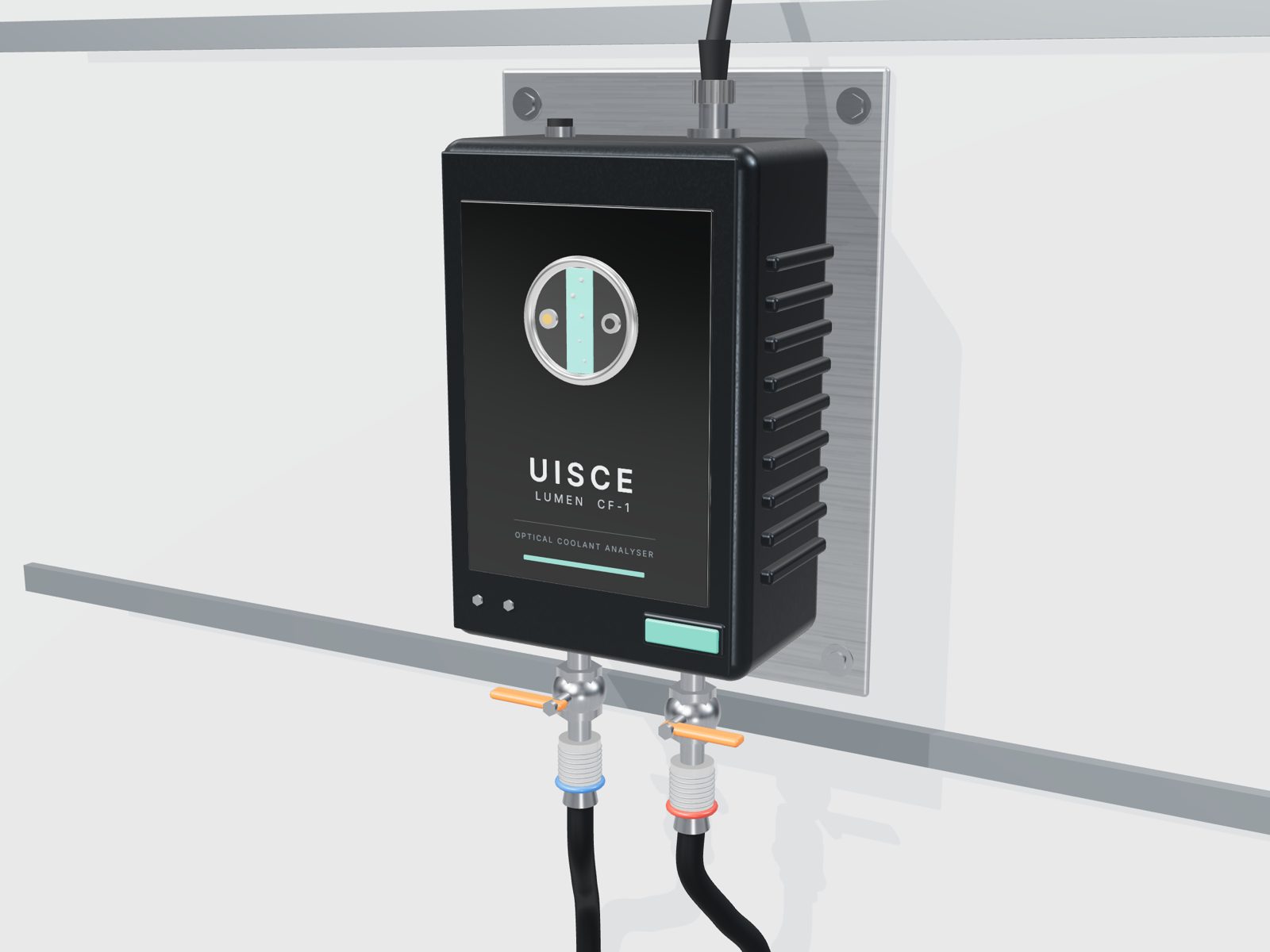
UISCE Lumen CF-1 mounted on unistrut rails beside a coolant distribution unit with braided hoses to UQD08 couplings
Recommended

CDU frame or unistrut

A stainless plate bolts to the CDU frame, a plant-room wall or standard unistrut. Two braided hoses connect to the TCS supply and return. One CF-1 sees the coolant shared by every rack on the loop, uses no rack space and keeps wet connections away from IT equipment.
UISCE Lumen CF-1 clamped to a facility water pipe with U-bolt brackets and hoses to saddle taps
Pipe clamp kit

Facility water pipework

U-bolt brackets clamp to facility water pipe, with saddle taps feeding the bypass. Track scaling, biological load and treatment dosing upstream of the CDU heat exchanger.

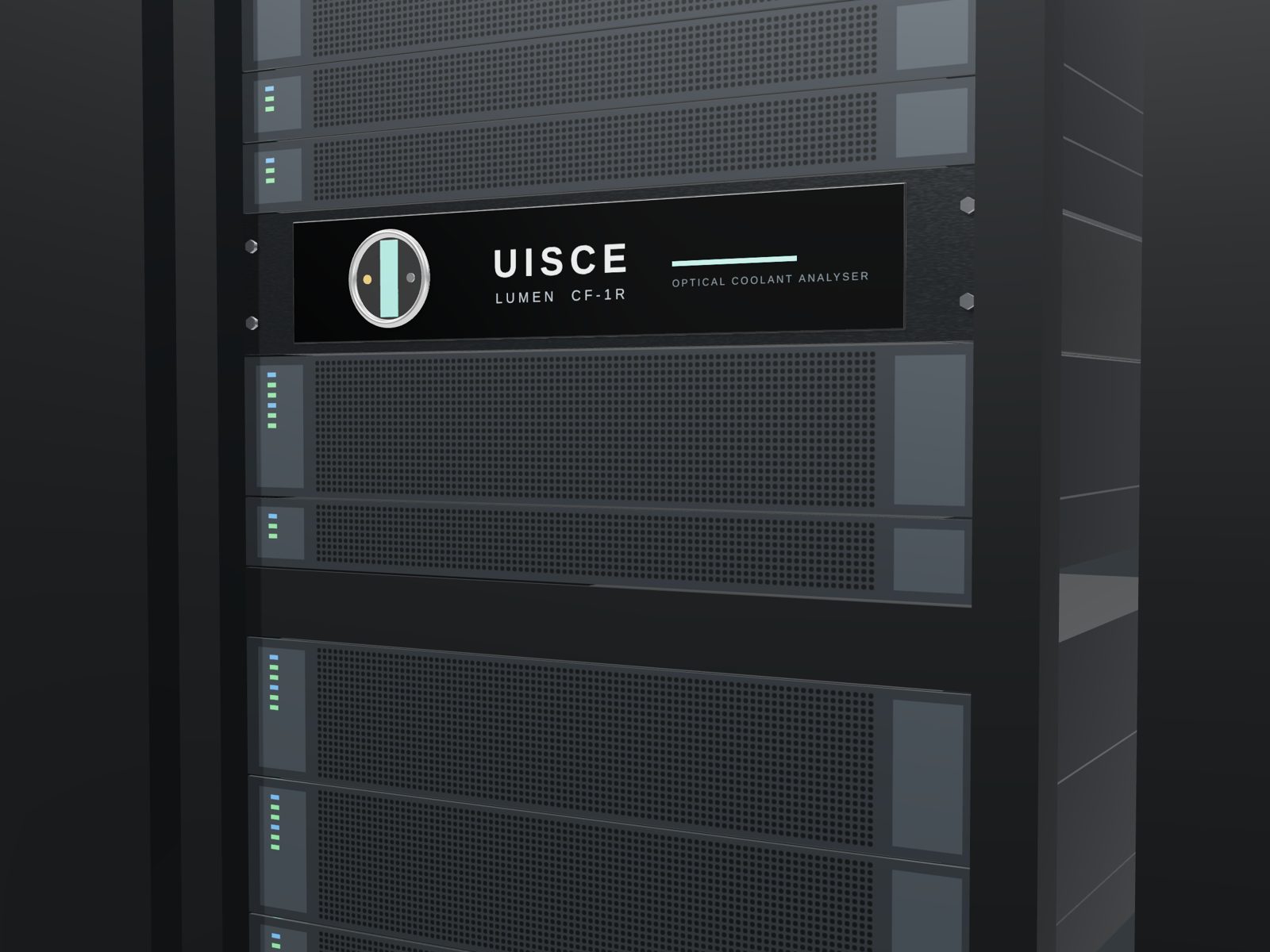
UISCE Lumen CF-1R 2U rack-mount coolant analyser installed in a 19-inch server rack
CF-1R · 2U

19-inch rack

The same optical core in a 2U chassis with rear couplings, for sites with rack-level CDUs or teams who want every monitored device on a rack elevation. It still reports over its own cellular link.

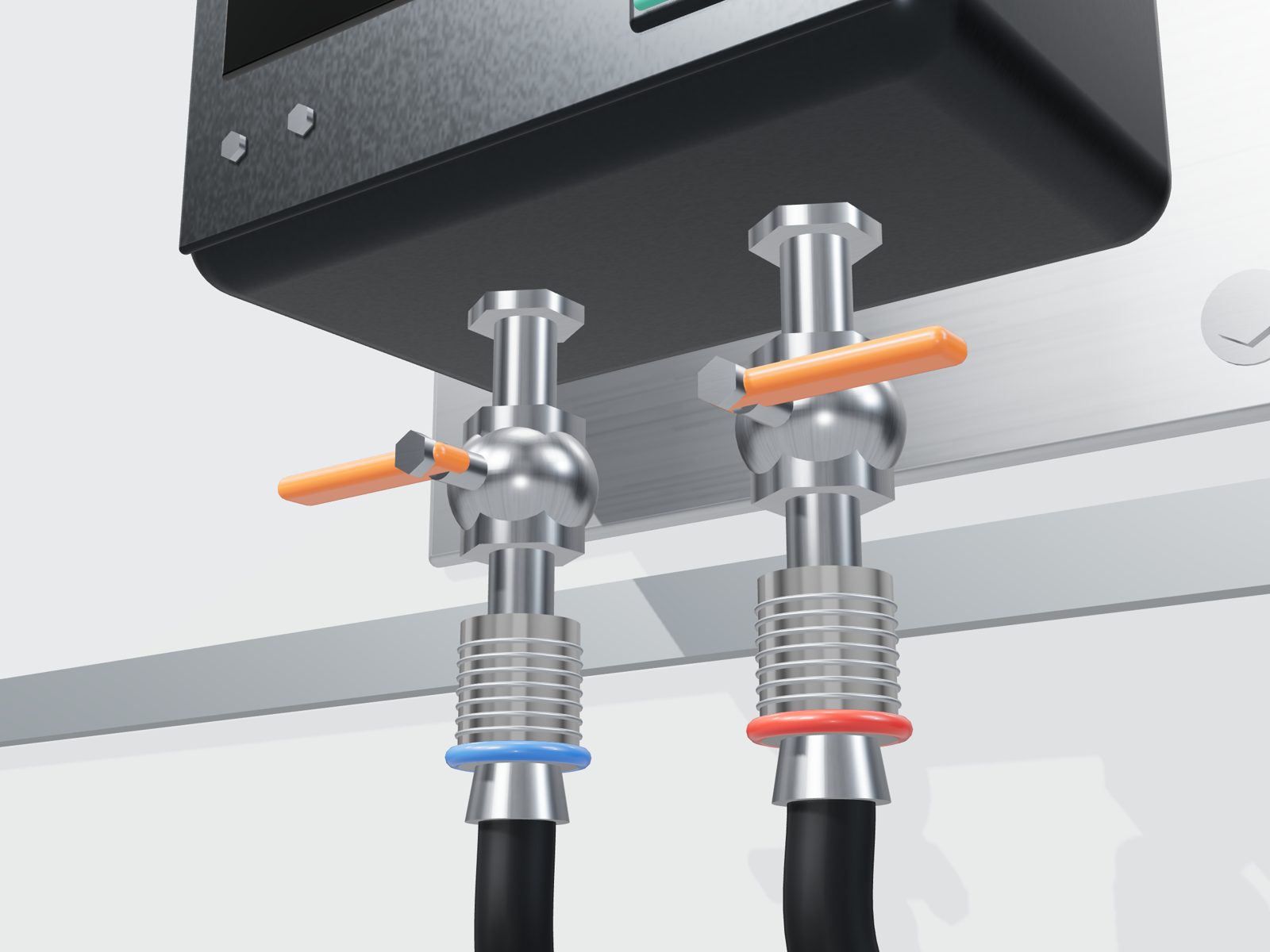
Close-up of CF-1 quarter-turn isolation valves and UQD08 quick-disconnect couplings with blue supply and red return rings
Every format

Swap it in minutes

A quarter-turn isolation valve sits above a ½" UQD08 quick disconnect on each line, the coupling family the Open Compute Project specifies for liquid-cooled IT. Close two valves, release two couplings and the sensor is out, while the cooling system keeps running.

Placement

One loop or both.

Direct-to-chip systems have two loops separated by the CDU heat exchanger. Each has its own chemistry and its own risks.

Where CF-1 sensors sit in a liquid cooling system Facility water flows to the CDU, which serves GPU racks. CF-1 pipe mount on facility water, CF-1 at the CDU (recommended), CF-1R in the rack. Facility water Chillers, dry coolers, towers CDU Heat exchanger, pumps, filters GPU racks Cold plates, TCS loop CF-1 pipe mount CF-1 at CDU · best CF-1R in rack

Parameters

What each reading tells you.

ParameterMethodWhat it tells youHealthy band
Glycol concentrationRefractive indexFreeze and microbial protection; catches wrong-mix top-ups and leaks.Supplier spec ±2%
pHOptical optodeInhibitor health and corrosion risk; falling pH signals glycol turning to acids.Alkaline, per supplier
TurbidityLight scatteringParticulates that foul filters and cold-plate fins.Low, trend-based
Corrosion indicatorsUV-Vis absorbanceDissolved copper and iron species and inhibitor depletion.Baseline + trend
Microbial activityNative fluorescenceEarly bacterial growth before biofilm is visible.Baseline + trend
ConductivityContactless cellIonic contamination, facility water ingress, dissolved metals.Site-specific
TemperatureRTD in flow cellCompensates optical readings; confirms supply conditions.Loop design

Bands are configured per site from the coolant manufacturer's datasheet. Trend-based readings alert on rate of change against a commissioning baseline.

Compare

A different way to watch coolant.

Lab samplingTypical inline monitorsLumen CF-1
How often you knowMonthly or quarterlyContinuousEvery few minutes
Network connectionNoneWired into your networkOwn cellular link; Ethernet optional
IT and security reviewNot neededFirewall rules, VLANs, patchingNone on cellular
Reports during network outageNot applicableNoYes
ParametersBroad, per testVaries by vendorSeven, including biology and glycol
Drift and foulingNot applicableProbes need recalibrationSapphire optics, self-checked
Detailed lab chemistryFull analysisVariesIndicators; lab confirms when flagged

Continuous monitoring works alongside your coolant supplier's lab analysis. It tells you when to sample and what to look for.

Software

Every loop. Every site.
One dashboard.

The UISCE.ai platform turns readings into decisions, hosted on Irish and European servers.

Fleet dashboard

Every CF-1 across every site, with trends, healthy bands and forecasts of when each value will drift out of range.

Ask in plain language

A built-in AI assistant answers questions such as "which loops are losing glycol fastest?" and drafts maintenance notes.

Connects to your tools

Email and SMS alerts, a REST API for DCIM and ticketing, and Modbus TCP over the optional Ethernet port for your BMS.

Applications

Made for every
liquid-cooled facility.

Hyperscale and AI

Fleet-wide coolant visibility across dense GPU halls, with consistent alarms and evidence for warranty discussions with cooling vendors.

Colocation

Monitor shared facility water without placing a third-party device on any tenant's network, and show customers their coolant is in specification.

Enterprise and HPC

Early warning for smaller teams running a handful of CDUs without a dedicated water-treatment specialist.

Retrofits

Air-cooled halls converted to liquid cooling often inherit legacy pipework. Monitoring from day one catches flushing debris early.

Heat reuse

Sites exporting heat to district networks add another water interface. Watch both sides of the exchanger.

Commissioning

Prove a new loop has been flushed and filled to specification before IT load goes live, with a timestamped record.

Tech specs

Design targets for first production units, to be confirmed through pilot deployments.

Formats

  • CF-1 for CDU, wall, unistrut and pipe mounting
  • CF-1R, 2U 19-inch rack mount

Size

  • CF-1 approx. 300 × 200 × 120 mm
  • Anodised aluminium enclosure, stainless mounting plate

Connectivity

  • Built-in 5G / 4G LTE cellular modem with eSIM
  • External antenna connector for deep data halls
  • Gigabit Ethernet, optional
  • Outbound-only TLS encryption; no inbound ports

Protocols

  • MQTT over TLS and REST API via UISCE.ai cloud
  • Modbus TCP over Ethernet for BMS

Fluid connections

  • 2 × ½" UQD08 (OCP), parallel bypass
  • Quarter-turn isolation valve on each line
  • Wetted parts: 316 stainless steel, sapphire, EPDM

Measurements

  • Glycol, pH, turbidity, corrosion indicators, microbial fluorescence, conductivity, temperature
  • Interval configurable; default every 5 minutes

Fluids

  • PG25 and other propylene or ethylene glycol mixes
  • Treated facility water

Power

  • 12 V DC or mains
  • Solar is also an option

Maintenance

  • Front-swappable optical pH cartridge
  • On-device buffering if the connection drops

Cloud

  • UISCE.ai platform on Irish and European servers

Questions? Answers.

Does the CF-1 need to connect to my data centre network?

No. The CF-1 has its own built-in 5G/4G cellular connection and sends encrypted data directly to the UISCE.ai cloud. It never joins your IT or OT network, opens no inbound ports and needs no firewall changes. Ethernet is available as an option when you want readings in your building management system.

What if cellular signal is weak inside the data hall?

The CF-1 supports an external antenna on a cable run to a point with good signal, and we check coverage during site survey. Where cellular isn't practical, the unit can run over Ethernet instead.

What does a data centre coolant sensor measure?

The Lumen CF-1 measures glycol concentration by refractive index, pH with an optical optode, turbidity by light scattering, corrosion products and inhibitor depletion by UV-Vis absorbance, microbial activity by fluorescence, plus conductivity and temperature.

Where should a coolant sensor be installed?

For most sites the best position is a sidestream bypass on the technology cooling system at the CDU. One sensor there sees the coolant shared by every rack on that loop. A second unit on facility water adds visibility of scaling and biological risk upstream.

Do I need to drain the loop to install it?

No. The CF-1 connects through two ½" OCP UQD08 quick-disconnect couplings on a parallel bypass, with isolation valves on both lines. Primary flow is never interrupted.

How is this different from lab sampling?

Lab sampling gives a snapshot days after the sample is drawn, typically monthly or quarterly. Continuous monitoring reports every few minutes, so glycol dilution, pH drift or early biofilm are caught while there's time to act. We recommend keeping periodic lab analysis as a reference.

What maintenance does it need?

The optical path is self-checked every cycle. The optical pH cartridge is the only consumable and swaps from the front panel. Removing the whole unit takes two valves and two couplings.

Is the CF-1 available now?

The CF-1 is in development and we're recruiting pilot sites. Published specifications are design targets that will be confirmed during pilot deployments.

Put a CF-1
on one of your loops.

We're selecting a small number of design-partner sites for deployments. Partners get early hardware, a direct line to our engineers and the UISCE.ai platform at no cost during the initial stage of deployment.

Or emailsales@uisce.ai

Already a UISCE.ai customer? Sign in to your dashboard